

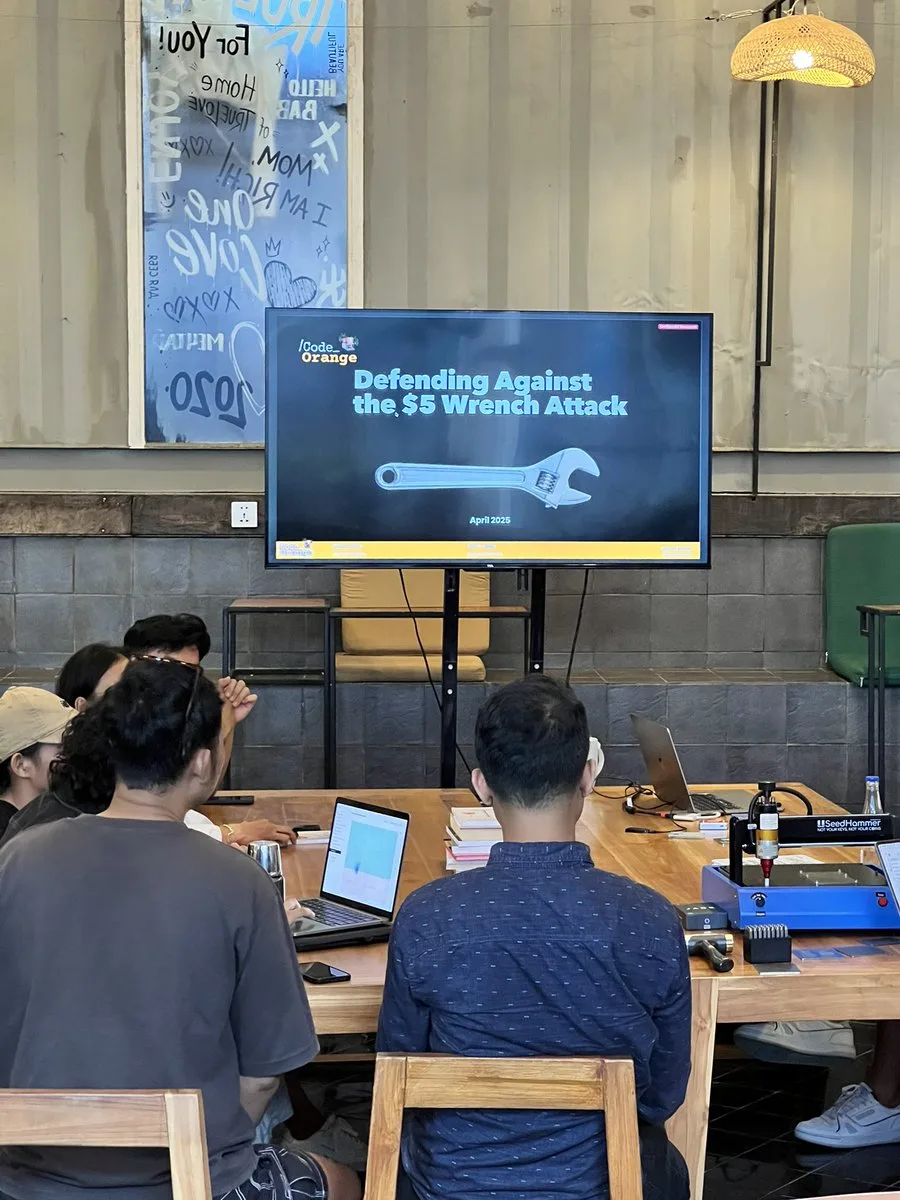
There's an old Bitcoin joke. You can protect your coins with the strongest encryption in the world, and someone can still hit you with a $5 wrench until you hand over the password.
It stopped being a joke a while ago. In July 2026 we wrote that at least one bitcoiner a week is kidnapped, tortured or extorted, and that the week before, $5M in bitcoin and crypto had been extorted right here in Bali. That's why we've been teaching wrench attack defence since our first workshop on it in April 2025.
(As we joked on X at the time, it should probably be called the $21 wrench attack by now. Then again, a wrench here cost 10,000 sats the year before and only 5,000 sats that year. Half price, if you measure in bitcoin.)
No single trick. Layers.
The main lesson from every one of these sessions is the same: there is no one magic setup. You stack defences, so that each one covers a gap in the others. The three we started with in 2025 were:
- Good opsec
- Decoy wallets (we used Trezor)
- Multisig (we used Nunchuk)
Since then we've added passphrases and timelocks to the toolkit. Here's how each one helps.
1. Opsec: don't be a target
The best wrench attack is the one that never happens. Most attacks start with someone knowing, or guessing, that you hold bitcoin.
So the first layer has nothing to do with wallets. Don't talk about how much you hold. Don't post screenshots of balances. Think twice about wearing the merch in the wrong place, or telling new friends where you keep your hardware wallet. Privacy on-chain matters too: in our September 2026 workshop we looked at transactions on mempool.space to see exactly what chain analysts can see about you.
2. Decoy wallets: something to hand over
If someone does come for you, it helps to have something to give them.
A decoy wallet holds a smaller amount that you can reveal under pressure, while your main savings stay hidden. With a passphrase you can do this on one device: your 12 or 24 words open one wallet, and the same words plus a passphrase open a completely different one. Without the passphrase, nobody can tell the second wallet exists.
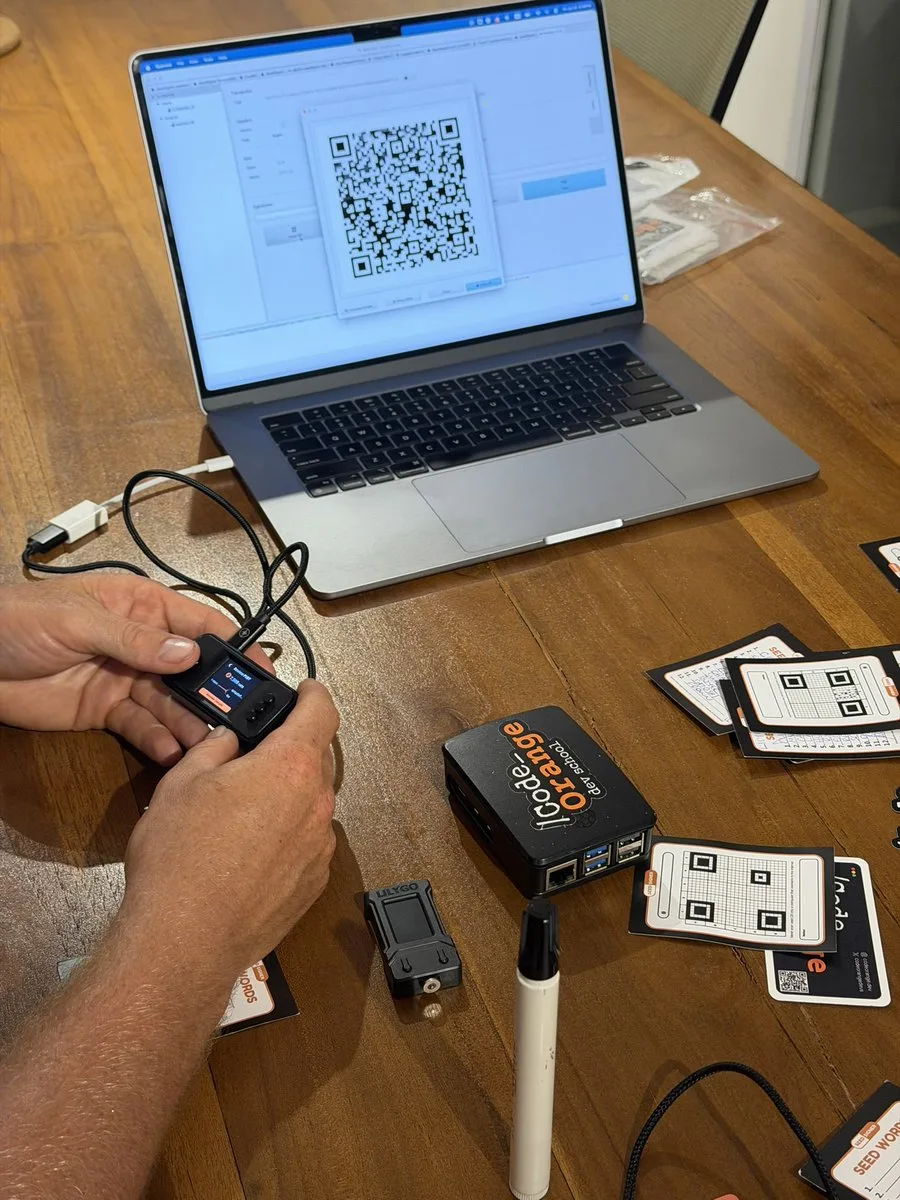
At our April 2025 workshop we set up decoy wallets on Trezor. In July 2026 we loaded seed phrases and passphrases onto SeedSigner.
3. Multisig: you can't hand over what you don't have
With multisig, spending needs more than one key, for example two out of three. If those keys are kept in different places, or some are held by people you trust, then you physically can't move the coins on your own, even if you wanted to.
That changes the attacker's maths. If the coins can't be moved on the spot, the attack doesn't pay. In October 2026 we built a 2-of-3 multisig live with three different hardware wallet brands, using Sparrow to set it up and Nunchuk to recover it.
4. Timelocks: not today, not even for me
The newest layer we've been testing is the timelock. In July 2026 we tried absolute locktime in Sparrow Wallet: coins that can't be spent until a set date or block height. Until then, nobody can move them. Not an attacker, and not you.
That's both the strength and the catch. It's a strong answer to "transfer it now", but it locks your own money too, so it suits long-term savings, not spending money. We asked our community on X what the best way to timelock bitcoin against wrench attacks is, and it's still an open conversation. If you have ideas, bring them to the next workshop.
Start simple
All of this can sound like a lot. It is a lot, if you try to do it all on day one. Our advice from the October 2026 self-custody workshop:
If you're new to self-custody, don't start with multisig. Start with a mobile wallet. Then move to one hardware wallet. After that, add a passphrase. Then, when you're comfortable, look at multisig. Each step only makes you safer if you actually understand it and can recover from it.
And one thing that matters more than any setup: if you're ever threatened, your safety comes first. Bitcoin can be earned again.
Learn it hands-on
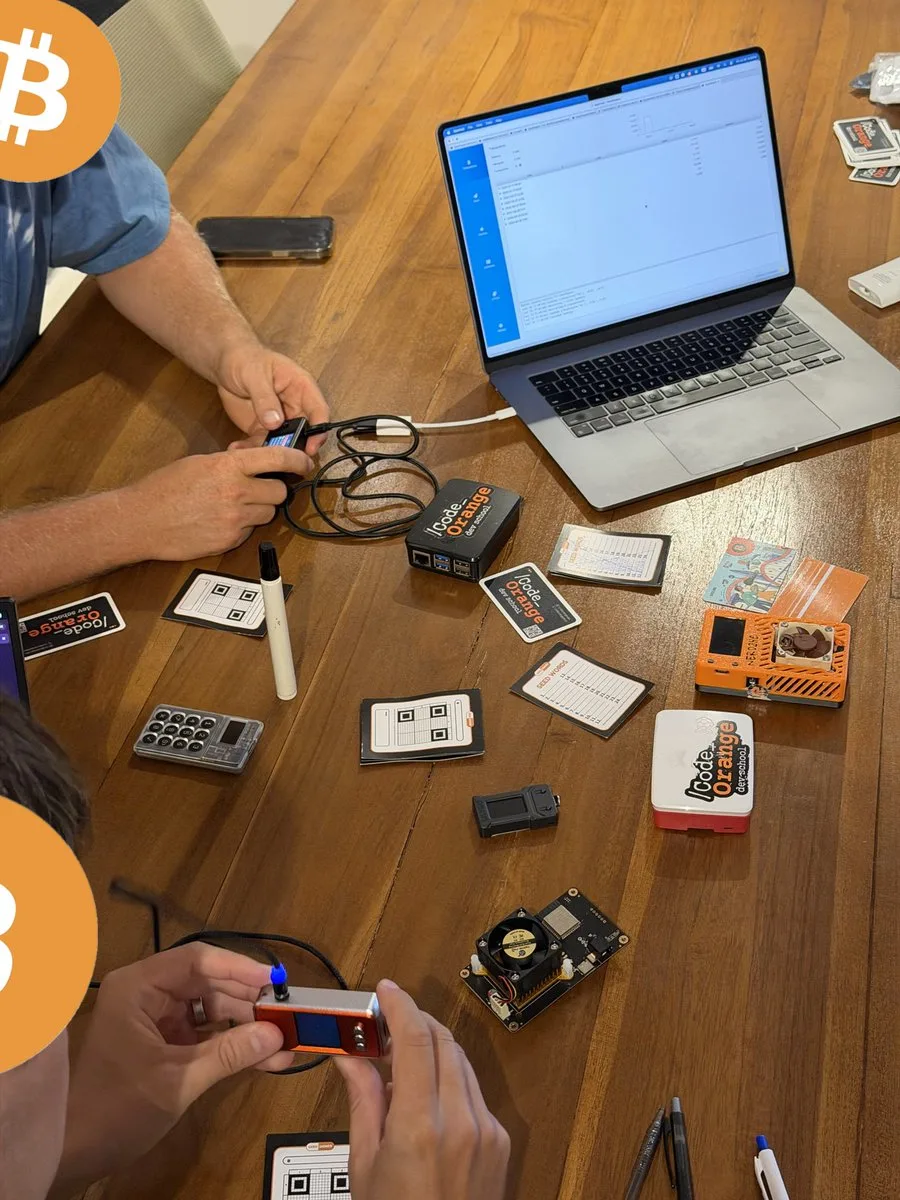
Wrench attack defence is a regular part of our self-custody workshops, online on Discord and in person at Bitcoin House Bali. Check the calendar for the next one, read why self-custody matters if you're just starting, and see all our programs. Questions? Ask on Discord.
Layers, not luck.
This article started as a few posts on our X account. The originals: 22 Apr 2025 · 25 Apr 2025 · 29 Apr 2025 · 16 Jul 2026 · 23 Jul 2026 · 24 Jul 2026 · 16 Oct 2026.