

When people first hear about privacy in Bitcoin, they often assume it only matters for security experts or people with something to hide.
In reality, digital privacy is just basic personal defense.
Every time you make a transaction or send funds to an address, you leave digital breadcrumbs. Without a basic understanding of privacy, your financial history, wallet balance and spending habits can easily be linked together by chain analysis companies, anyone looking at a public block explorer, and data brokers.
You wouldn't shout your bank balance across a coffee shop. Protecting your Bitcoin transaction data is no different.
The illusion of anonymity
A common misconception is that Bitcoin is anonymous. It isn't. Bitcoin is pseudonymous.
The blockchain is a permanent, public ledger. Your real name isn't written into a block, but your addresses are. The moment you buy bitcoin on a platform that requires identity verification (KYC) and withdraw it to your own wallet, that address is linked to your real-world identity.
From that point on, every transaction connected to that wallet can reveal:
- Your balance. Anyone you pay can look up the transaction, see the coins you spent and the change that went back to you, and get a good idea of how much bitcoin you hold.
- Your spending patterns. Analysis tools cluster your addresses together over time to map where you spend money and who you transact with.
- Your IP address. A light wallet that talks to someone else's server without a private connection can leak your IP address, and which addresses are yours, to that server.
Simple habits for better privacy
Protecting your privacy doesn't mean disappearing off the grid or becoming a cryptography expert. It comes down to a few consistent habits:
- Avoid address reuse. Use a fresh receiving address for every payment. Most good wallets do this for you. It stops observers from linking all your incoming payments to a single address.
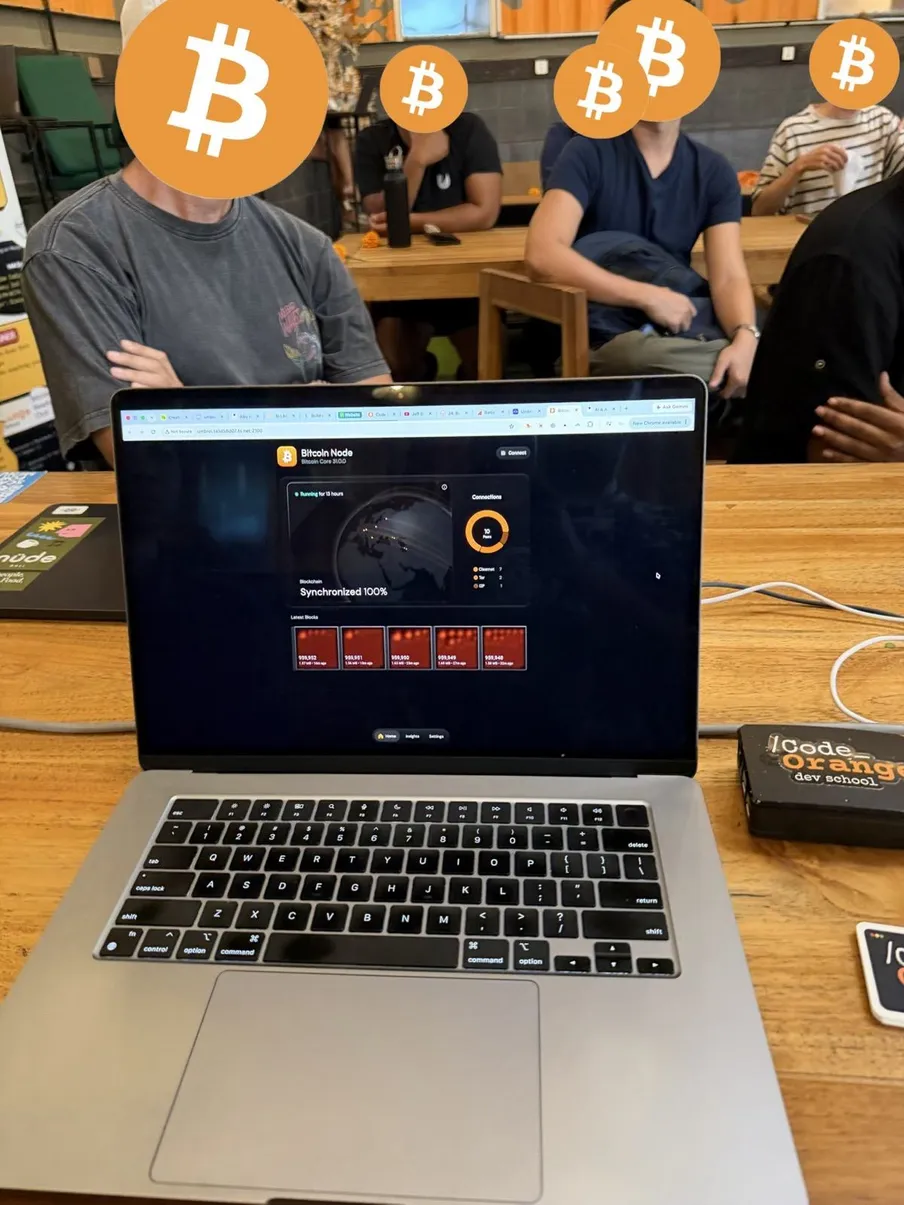
- Run your own node. Connect your wallet to your own full node, ideally over Tor or I2P. Then you're not telling an outside server which addresses are yours or where your transactions come from.
- Try the newer privacy tools. PayJoin lets the sender and receiver both add coins to a payment, which breaks the usual assumption that all inputs belong to one person and hides the real amount. Silent Payments let you share one reusable address while every payment still lands on a fresh, unlinkable address.
Learning privacy tools in practice
Figuring out coin selection, UTXO management or network routing on your own can feel technical and confusing. Reading about script types and coinjoins only gets you so far, until you see what a transaction graph actually looks like on a block explorer.
That's why we build hands-on labs into our community sessions:
- Privacy Track. Our Privacy Track meets every 1st and 3rd Tuesday on Discord. We work directly with PayJoin, Silent Payments and ecash: you inspect raw transaction inputs, see how privacy protocols break the heuristics trackers rely on, and test everything in a zero-stakes environment. Catch up on past sessions like how PayJoin works and PayJoin v2, tested live.
- Hands-on node setups. Drop into a local meetup or online workshop from our calendar and get step-by-step help routing your wallet through Tor or your own node.
Take control of your financial footprint
Privacy is a muscle. You don't need to overhaul your whole setup overnight. You just need to start paying attention to how your transaction data moves. (If you're still keeping coins on an exchange, start with why self-custody matters.)
Check out upcoming privacy labs and workshops on our calendar, or jump into our community on Discord and ask a question in the #privacy channel.
You don't need to know everything before you join. You just need to show up.
See you at the next one.