


Say you want to accept bitcoin donations, or put a payment address on your website or your invoice. The easy thing is to publish one Bitcoin address. The problem: anyone can paste that address into a block explorer and see every payment you ever received, how much, and when you spent it.
Silent payments fix this. With silent payments in Bitcoin, you publish one reusable address, and every payment still lands at a fresh, unlinkable address on the blockchain. This guide explains how it works in plain English, the way we teach it in the Code Orange Privacy Track.
The problem: address reuse
Bitcoin is public by default. Every transaction is visible to everyone, forever. Your name isn’t on it, but addresses are.
That’s why wallets give you a new address every time you click "Receive". If every payment goes to a different address, it’s much harder for an outsider to tie them together.
But a fresh address each time doesn’t work everywhere. You can’t print a new address on a donation poster for every donor. A streamer, a charity or an open-source developer with a "tip me" button needs one address they can share publicly. Reusing that one address means:
- Anyone can see your full income from that address.
- Every payer can see what other people paid you.
- Your spending can be traced, because the coins from that address are linked to you.
What silent payments do
Silent payments (defined in BIP352) give you a reusable address that starts with sp1. You can post it anywhere.
When someone pays it, their wallet uses your silent payment address to work out a brand-new Bitcoin address that only you can spend from. The next payer gets a different one, and so on. On the blockchain, the payments look like normal, unrelated transactions. Nobody looking at the chain can tell they all went to the same person, or that a silent payment address was used at all.
And it works without any of the extra steps older ideas needed:
- No server that has to be online to hand out addresses.
- No notification transaction telling the world "I’m about to pay this person".
- No back-and-forth between sender and receiver. The sender just pays.
How it works, without the maths
There is clever cryptography underneath, but the idea fits in a few lines.
Your silent payment address is really two public keys glued together: a scan key and a spend key.
- The sender combines your scan key with the private keys of the coins they are spending. This produces a shared secret that only the two of you can compute.
- From that secret, the sender’s wallet works out a one-time address and sends the bitcoin there.
- You later take the same transaction, combine it with your private scan key, and get the same shared secret. If the one-time address matches, the coins are yours, and your spend key lets you spend them.
Because the shared secret depends on the sender’s coins, every payment produces a different address, even if the same person pays you twice.
In our Privacy Track we use an analogy: it’s like two people each mixing their own secret paint colour with a shared base colour. Both end up with the same final colour, but anyone watching only sees the base, and can’t work out the result.
The catch: finding your money
Silent payments move the work from the sender to the receiver. Since there’s no notification, your wallet has to check every eligible transaction on the blockchain to see if any of them are for you. That’s called scanning.
There are three ways to do it, each with its own trade-off:
| Way to scan | How it works | Privacy |
|---|---|---|
| Your own full node | Your node checks every block itself | Best: nobody else is involved |
| Light client with "tweaks" | A server sends small hints for each transaction; your wallet finishes the maths at home | Good: the server doesn’t learn which payments are yours |
| Hand over your scan key | A server scans for you | Weakest: the server sees all your incoming payments (but can’t spend them) |
Think of it like the post office. You can sort all the mail yourself, you can get a stamp for each letter and test them at home, or you can give the postman a key that opens only your letters. The last one is quick, but he can read them.
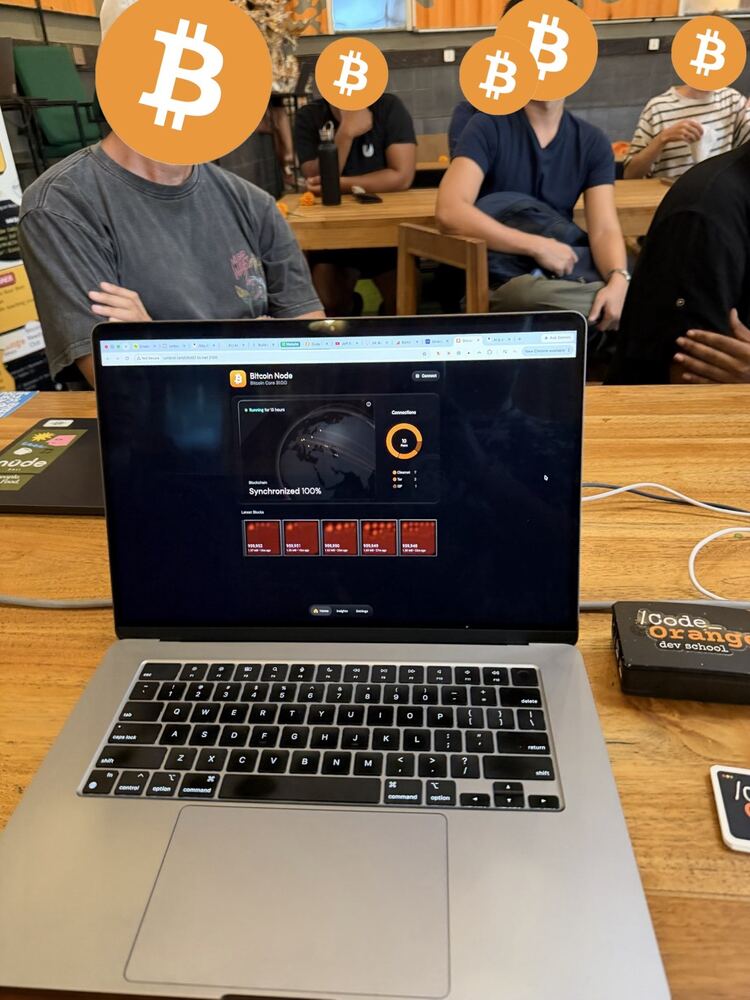
If you already run a node, scanning is the most private option. Our guide How to Run Your Own Bitcoin Node shows you how.
Silent payments vs other privacy tools
Silent payments protect the receiver’s addresses. They are not a mixer and they don’t hide amounts.
- PayJoin protects a single payment by having sender and receiver both add coins, which breaks a common chain-analysis guess. Read What Is PayJoin? for the full story.
- Coin control lets you choose which coins to spend, so you don’t merge coins you’d rather keep separate.
- Lightning and ecash keep payments off the main chain altogether.
These tools work well together. A silent payment address for receiving, plus good coin control when spending, already puts you far ahead of most Bitcoin users.
Can I use silent payments today?
Yes, but support is still growing. A few wallets can send to sp1 addresses, and a smaller number can receive. Before relying on it, check that both your wallet and the people paying you support it. The Bitcoin Optech silent payments topic page tracks the latest work.
In Bitcoin Core, the core silent payments logic was merged in 2026, and sending and receiving are still in review. That’s why we read the real code together in our Privacy Track Review Club session.
Learn it by building it
The best way to understand silent payments is to build them. In our free Privacy Track, you write your own silent payments sender in a few small Python functions and check it against the official BIP352 test vectors. Then you build a scanner and time how long it takes to scan a day of Bitcoin. The lab is open source on GitHub.
Sessions run on Discord every 1st and 3rd Tuesday. You don’t need to be a cryptographer. If you can read a bit of Python, you can follow along.
The easiest next step: join the Code Orange Discord and come to the next Privacy Track session.
Frequently asked questions
What are silent payments in Bitcoin?
Silent payments (BIP352) let you share one reusable Bitcoin address, while every payment you receive lands at a new address that nobody can link to you or to each other.
What does a silent payment address look like?
It starts with sp1 and is longer than a normal Bitcoin address, because it contains two public keys: a scan key and a spend key.
Are silent payments the same as PayJoin?
No. Silent payments hide which payments went to the same receiver. PayJoin makes a single transaction harder to analyse by having both sides add coins. You can use both.
What is the downside of silent payments?
The receiver’s wallet has to scan the blockchain to find payments, which takes more work than a normal wallet. Running your own node is the most private way to do it.
Which wallets support silent payments?
Support is growing. Some wallets can send to silent payment addresses and fewer can receive. Check the Bitcoin Optech silent payments page for current work, and test with a small amount first.