

At one of our workshops, a community member told a story about a carpet. They had bought it for bitcoin on Facebook Marketplace. Afterwards they looked up the payment on a block explorer, and saw that the seller's wallet held a full bitcoin.
So now a stranger knew what the seller looked like, where they lived, and how much bitcoin they had. All from one on-chain payment.
That's the question we keep coming back to at our privacy workshops: would you want everyone you pay to know how much bitcoin you own? And if not, does Lightning fix it?
We decided to test it instead of guessing.
Why on-chain payments leak
Bitcoin's base layer is public on purpose. Anyone can check every transaction, which is how anyone can verify there will only ever be 21 million bitcoin. The trade-off is that when you pay someone on-chain, they can often see more than the payment itself: where the coins came from and what else sits in the same wallet.
That's why we teach privacy as layers on top of Bitcoin: good on-chain habits, then Lightning, then ecash.
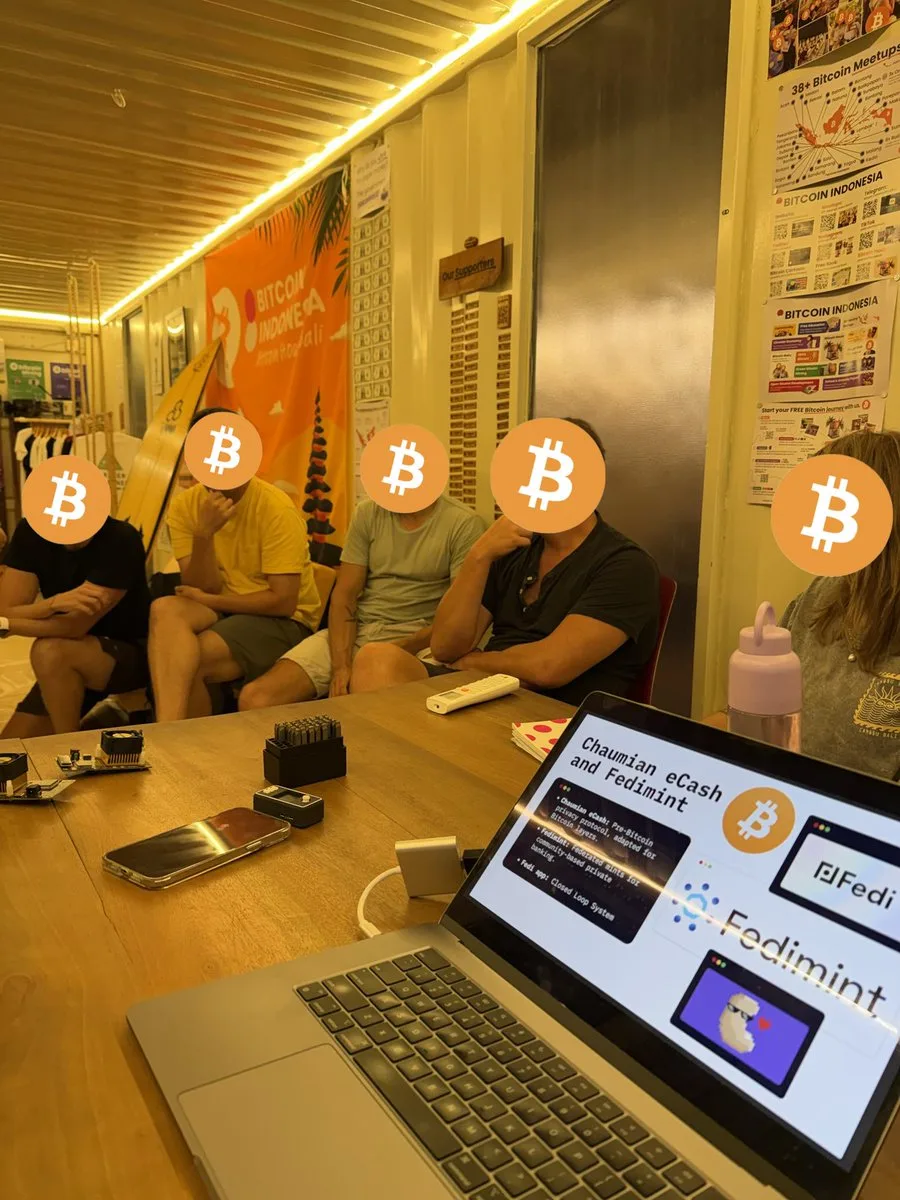
Experiment 1: three hops in Bali (October 2025)
Our Bitcoin Privacy Workshop at Bitcoin House Bali covered three things: the Lightning Network, ecash mints, and the Fedimint protocol.
For the Lightning part, we sent a payment across three different wallets: Blink, Wallet of Satoshi and Phoenix. Then the room tried to work out where the money had gone.
Our conclusion that night: it's really difficult to track a Lightning payment after three hops. And that's before you bring in an ecash wallet like Cashu.
Lightning payments don't get written to the blockchain one by one. They move through channels, and each hop only sees part of the route. For someone outside, watching a block explorer, there's very little to follow.
Experiment 2: who can see what? (October 2026)
A year later, at our online Sovereign Bitcoiner Workshop hosted by Razor, we ran the test again, but asked a sharper question.
We passed about $6 of sats from Blink to Primal to Wallet of Satoshi and on to another Wallet of Satoshi user. Then, instead of asking "can a stranger follow this?", we asked: what could each company hand over if a government came knocking?
The answer was more than people expected: node IDs, email addresses, maybe IP addresses.
So the honest result looks like this:
- From other people, custodial Lightning is fairly private.
- From the custodians themselves, it is not. The wallet company knows what you sent and received.
We also looked at how a Lightning invoice can reveal your node, and at tools that help: running your node behind Tor, tools like LN Proxy that wrap an invoice so the payer doesn't see your node, and ecash. You can read the full recap of that session and watch the recording there.
Experiment 3: an ecash payment (November 2025)
So if the wallet company can see everything, what's the alternative?
In November 2025, as part of one of our privacy workshops, we used ecash on Fedi to make a completely private payment.
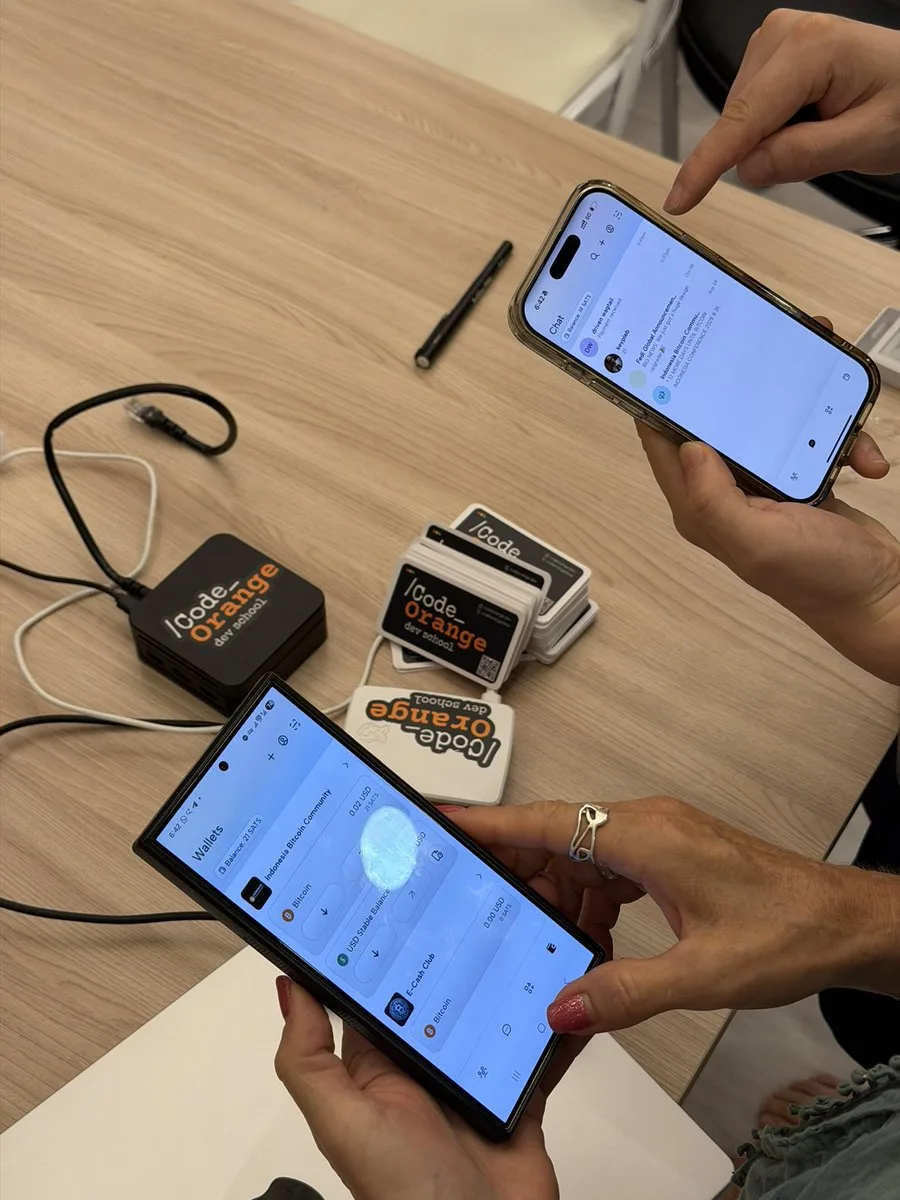
Ecash works differently from a Lightning wallet. A mint, run by a group of guardians in the case of Fedimint, issues tokens backed by bitcoin. When you spend them, the mint can't link the token you spend back to you. It's the closest thing we have to handing someone cash.
It's not perfect. You trust the mint's guardians to hold the bitcoin. But for everyday payments it gives you privacy that a normal custodial wallet can't.
And it travels. In February 2026 we sent Fedi ecash to people in the US, India, Lithuania, Australia and even China, without a bank. Our Bitcoin Reading Club quizzes still pay their winners in Fedi and Cashu ecash.
What we tell people now
After these experiments, the advice at our workshops is simple:
- Know who you're hiding from. A stranger, a wallet company and a government are three very different threats.
- Use Lightning for everyday payments. It's much harder for outsiders to follow than on-chain.
- Remember that custodial wallets see everything. If that matters to you, run your own node (behind Tor) or use ecash.
- Try ecash for small, private payments. Fedi and Cashu are both easy to start with.
Why this matters
As we wrote on X after that workshop: Bitcoin will get centralised and fail if we don't have daily private payments. Cypherpunks knew this from the beginning.
Privacy isn't about having something to hide. It's about not handing strangers, companies or governments a map of your money. We wrote more about that in Privacy Is Protection.
Try it with us
The best way to understand this is to send a payment yourself and see what shows up. Our Privacy Track runs online every 1st and 3rd Tuesday and goes deeper into Lightning, ecash and more. Check the calendar for the next workshop, online or in Bali, and say hi on Discord.
Lightning hides you from strangers. Ecash hides you from the middleman.
This article started as a few posts on our X account. The originals: 24 Oct 2025 · 24 Oct 2025 · 4 Nov 2025 · 4 Nov 2025 · 25 Feb 2026 · 15 Oct 2026