

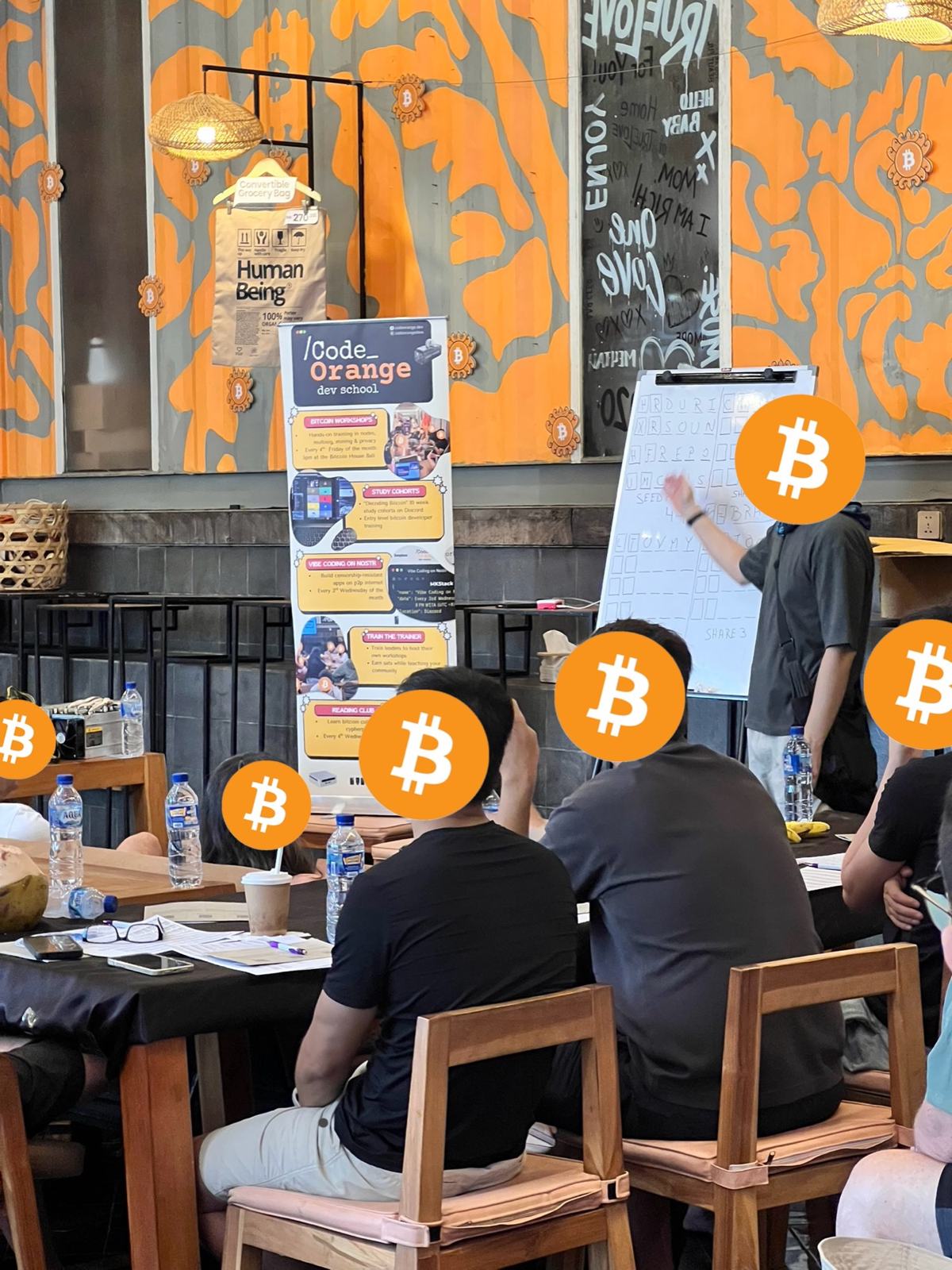
When people hear the phrase "Bitcoin educator," they often picture someone on social media posting price charts, macro predictions, or hot takes on market cycles.
That is not education. That is commentary.
A real Bitcoin educator does something much quieter and far more practical: they help people understand how the system actually works, how to verify it for themselves, and how to use it without relying on blind trust.
In short: a Bitcoin educator teaches people how Bitcoin works and how to use it safely on their own: verifying software, understanding transactions, backing up and recovering keys, and running a node. The goal is independence, not followers.
Commentary vs. education
The two can look similar in a social feed, but they ask very different things of the audience.
| Bitcoin commentator | Bitcoin educator |
|---|---|
| Talks about price, cycles and predictions | Teaches how the system works |
| Says what to buy or when to sell | Shows how to hold, verify and recover |
| Asks you to trust their take | Shows you where to check for yourself |
| Measures success in followers | Measures success in people who no longer need them |
Bridging the gap between theory and practice
Bitcoin sits at the intersection of cryptography, distributed systems, and economics. For someone taking their first steps off an exchange, the technical barrier can feel steep. Seed phrases, UTXOs, fee estimation, hardware signers, and open-source software verification all carry real consequences if misunderstood.
A Bitcoin educator translates these mechanics into clear, actionable steps without dumbing them down. Instead of telling people what to buy or when to sell, an educator focuses on the questions that actually matter for long-term sovereignty:
- How do you verify software? Teaching users how to check signatures and hashes before installing a wallet, rather than trusting a download link.
- How do transactions actually move? Breaking down inputs, outputs, and change addresses so users understand what happens when they hit send.
- How do you recover from failure? Walking through seed phrase backups, passphrases, and recovery drills before real savings are on the line.
- Why does running a node matter? Explaining how independent validation removes the need to trust third-party servers.
Teaching people to verify, not trust
The core ethos of Bitcoin is verification. Good Bitcoin education mirrors that principle.
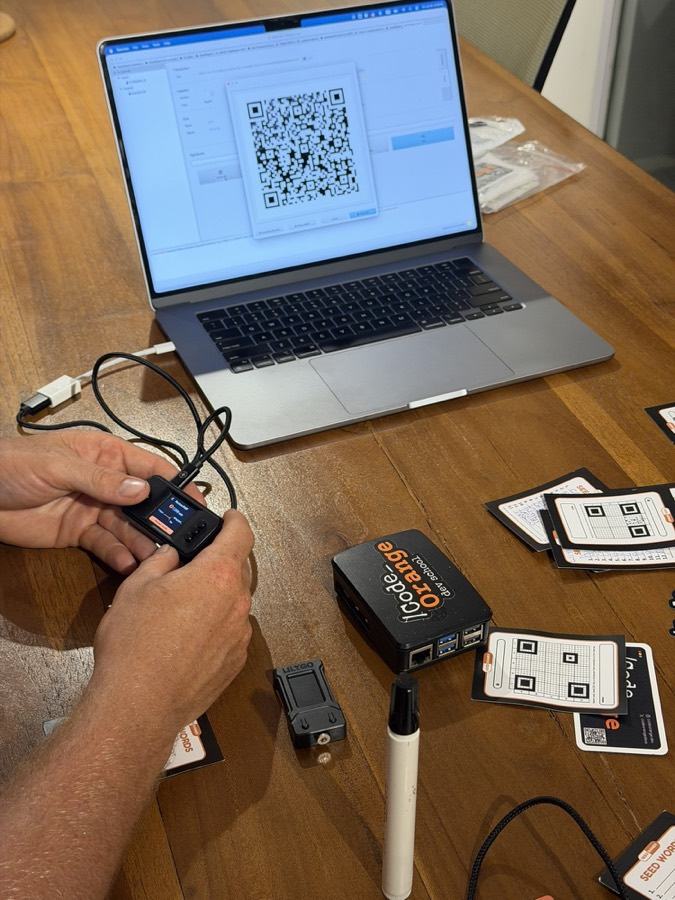
An educator does not ask learners to take their word for anything. Instead, they show learners where to look: how to inspect a raw transaction, how to read documentation, how to test setups on Signet or Testnet, and how to troubleshoot mistakes calmly.
Take something as ordinary as installing a wallet. A commentator might just post a download link. An educator walks you through checking that the file you downloaded is the one the developers actually released: comparing its hash against the published list, and checking that list’s signature against the developers’ public keys. It takes five extra minutes, and it is the difference between trusting a website and verifying the software that will guard your savings.
The goal is never to create permanent followers who depend on a teacher for every click. The goal is to build confident, independent users who can eventually sit across a table and teach someone else.
How to spot a good Bitcoin educator
Whether you are choosing a course, a YouTube channel or a local workshop, a few signs separate real educators from commentators:
- They make you do it yourself. You leave with hands-on practice, not just slides.
- They practice on test networks first. Nobody should learn recovery with their real savings.
- They point to primary sources. Documentation, open-source code and the tools themselves, not just their own opinion.
- They never ask for your seed phrase. Not for "help," not for "verification," not ever.
- They do not sell you a coin or a signal. If the lesson ends in a pitch, it was marketing.
Why community matters in education
Self-study gets you far, but learning alongside other builders accelerates everything. When people gather in study cohorts, workshops, or local meetups, abstract protocol rules turn into hands-on muscle memory.
And the best way to lock in what you just learned is to teach it to the next person. That is how a learner becomes an educator, and why Bitcoin needs more of them.
Frequently asked questions
What does a Bitcoin educator do?
A Bitcoin educator teaches people how Bitcoin works and how to use it safely by themselves: verifying wallet software, understanding transactions and fees, backing up and recovering keys, and running a node. They do not give price predictions or tell people what to buy.
Do you need to be a developer to be a Bitcoin educator?
No. Many of the best educators teach practical skills like self-custody, backups and privacy. What matters is understanding the topic well enough to explain it clearly and showing people how to verify it themselves.
Where can I learn Bitcoin from real educators for free?
Look for hands-on, open programs that use test networks and open-source tools. Code Orange runs free study cohorts, workshops and labs on Discord and in person, and we keep a list of free Bitcoin courses.
Learn with Code Orange Dev School
At Code Orange Dev School, our programs are built around that exact model:
- Decoding Bitcoin: A 10-week interactive study cohort on Discord, Mondays, where participants work through transactions, Script and Taproot exercises step by step. It started on 16 November, so it is not too late to join and catch up.
- Self-Custody Workshop: Monthly hands-on sessions covering hardware wallets, multisig setups and practical recovery workflows. It is taking a break in November and returns in December.
- Bitcoin Privacy Track: Dedicated labs on the 1st and 3rd Tuesday of each month, focused on transaction privacy tools and coin control workflows.
Browse our programs at codeorange.dev/programs, grab a spot on the Code Orange Calendar, or jump into Discord anytime to ask questions and share what you are working on.