

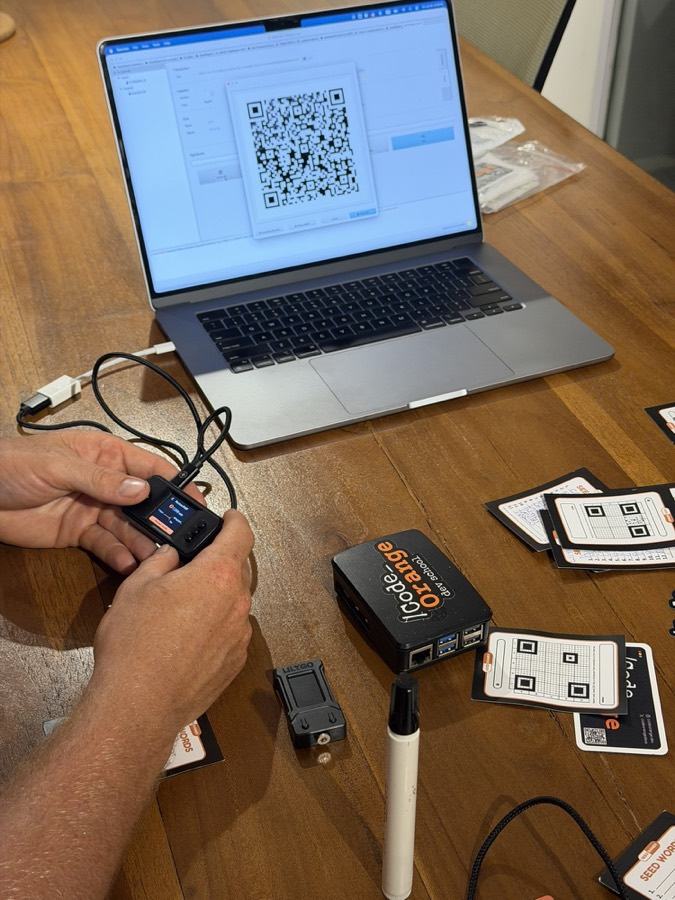
The first time you set up a Bitcoin wallet, it shows you a list of 12 or 24 ordinary words and tells you to write them down. Most people do it in a hurry, stick the paper in a drawer and never think about it again.
That list is the most important thing you own in Bitcoin. So what is a seed phrase, why does it matter so much, and how should you look after it? This guide answers all three in plain English, using what we teach at our hands-on self-custody workshops.
What is a seed phrase, in one sentence?
A seed phrase is a list of 12 or 24 words that can rebuild every private key in your wallet.
Your wallet doesn’t really "hold" bitcoin. The coins live on the blockchain, locked to addresses. What your wallet holds are the keys that unlock them. The seed phrase is the master copy of those keys, written in words a human can copy down.
Lose your phone, drop your hardware wallet in the sea, or watch your laptop die: none of that matters if you still have the words. Type them into any compatible wallet and your bitcoin is back.
The flip side matters just as much. Anyone who sees your seed phrase can take your bitcoin, from anywhere in the world, and there is no bank to call.
Where do the words come from?
The words aren’t random English. They come from a fixed list of 2,048 words defined in a standard called BIP 39. Almost every modern wallet uses it, which is why a seed from one wallet usually works in another.
Here’s roughly what happens when you create a wallet:
- Your device picks a very large random number.
- That number is turned into words from the list (12 words for 128 bits of randomness, 24 for 256).
- The last word includes a small checksum, so a wallet can often tell you if you copied a word wrong.
- The words are turned into a seed, and from that seed the wallet can create billions of addresses, always in the same order.
That last point is why one backup covers everything. You don’t need a new backup every time you receive bitcoin.
12 words or 24 words?
Both are safe. Twelve words give 128 bits of randomness, which is far more combinations than anyone could ever guess. Twenty-four words give even more, and some hardware wallets use them by default.
The real risk is not someone guessing your words. It’s someone finding them, or you losing them. Pick whatever your wallet gives you and put your energy into storing it well.
How to back up your seed phrase safely
These are the rules we walk through at every workshop.
Write it on paper or metal, never digitally. No photos, no screenshots, no notes app, no cloud, no email to yourself, no password manager unless you really know what you’re doing. Anything online can be hacked or synced somewhere you didn’t expect.
Check every word. Write clearly, number each word, and check the spelling against the BIP 39 list. Most wallets let you confirm the words straight after setup: do it.
Use metal for long-term storage. Paper burns, floods and fades. A simple steel plate where you stamp or slot in the letters survives fire and water. You only need the first four letters of each word, since every word on the list is unique by its first four.
Store it somewhere private and safe. Not taped under your desk, not in the box your hardware wallet came in. Think about fire, flood, theft and curious visitors.
Do a test recovery. Before you put real savings on a wallet, wipe it (or use a second device) and restore from your words. If it shows the same addresses, your backup works. This is the step most people skip, and the one that saves them.
Never type it into a website. No real wallet support team will ever ask for your seed phrase. Anyone who does is a scammer, every single time.
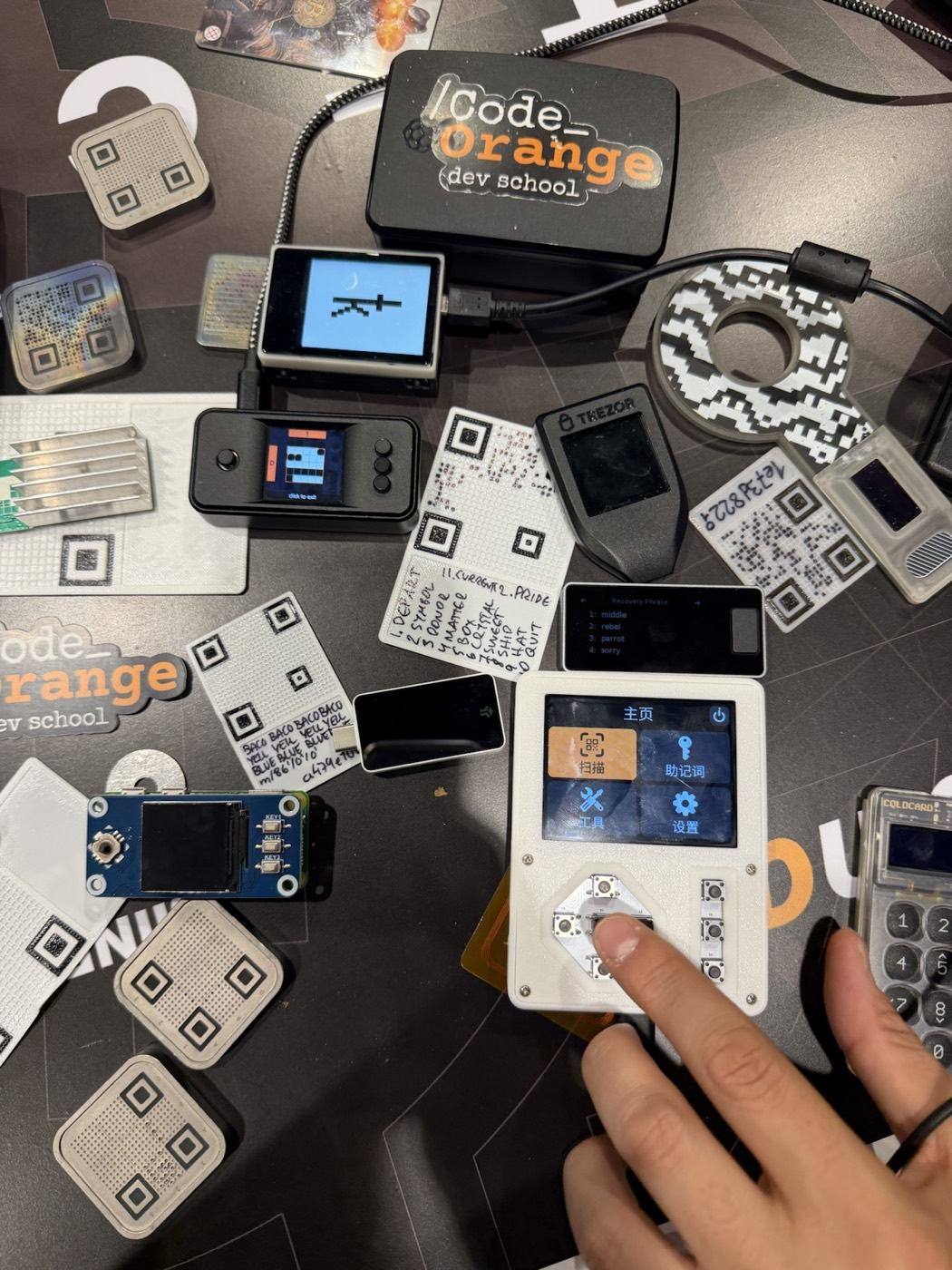
What about a passphrase (the "25th word")?
Many wallets let you add an optional passphrase on top of your seed. It works like an extra word you choose yourself. The same 12 or 24 words plus a different passphrase open a completely different wallet.
This protects you if someone finds your seed: without the passphrase they get an empty wallet. But it adds a new way to lose everything. If you forget the passphrase, your seed alone can’t recover your coins. If you use one, back it up too, stored separately from the seed.
When one seed isn’t enough: multisig
A single seed phrase is a single point of failure. For larger amounts, many people move to multisig: a wallet that needs, say, 2 of 3 keys to spend. Each key has its own seed phrase, ideally on a different brand of hardware wallet and stored in a different place.
Lose one seed and you can still spend. Someone steals one seed and they still can’t. We compared the options in Hardware Wallet or Multisig?, and in our October self-custody workshop people built a 2-of-3 multisig with three different devices and recovered it in a second wallet app.
If you’re worried about physical threats too, read our guide to the $5 wrench attack.
Common seed phrase mistakes
- Taking a photo "just for now". Phones back up to the cloud automatically.
- Storing the seed next to the device. One burglary and the thief has both.
- Only one copy. One house fire and it’s gone. Many people keep two copies in two places.
- Never testing the backup. A missing or misspelled word is only discovered when it’s too late.
- Telling people how much you hold. The less anyone knows, the safer you are.
- Not planning for family. If something happens to you, does anyone know the backup exists and how to use it? We cover inheritance in Why Self-Custody Matters.
Learn it hands-on
Reading about seed phrases is useful. Setting one up, wiping the device and getting your coins back with your own hands is what makes it stick.
Our free Self-Custody Workshop returns in December, and you’ll find every upcoming session on the Code Orange calendar. If you want to understand what happens under the hood, our free Decoding Bitcoin cohort covers keys, addresses and transactions step by step.
For a deeper technical read, learnmeabitcoin.com explains exactly how the words turn into keys.
Frequently asked questions
What is a seed phrase?
A list of 12 or 24 words that can rebuild all the private keys in a Bitcoin wallet. Whoever has the words controls the bitcoin.
Is a seed phrase the same as a private key?
Not quite. A seed phrase is the master backup that creates all your private keys. One seed phrase can produce billions of keys and addresses.
Can I store my seed phrase in a password manager or the cloud?
We don’t recommend it. Anything online can be hacked or leaked. Write it on paper or stamp it into metal, and keep it offline.
What happens if I lose my seed phrase?
If your wallet still works, move your bitcoin to a new wallet with a new seed and back that one up properly. If you lose both the device and the seed, the bitcoin can’t be recovered.
Can I use my seed phrase in a different wallet?
Usually, yes. Most wallets follow the BIP 39 standard, so the same words restore the same coins in another app. Some wallets also need the right "derivation path" or script type, which recovery guides list.
Should I use 12 or 24 words?
Either is secure. Focus on storing the words safely and testing your recovery, not on the number of words.
The easiest next step: join the Code Orange Discord and come to our next self-custody workshop.